
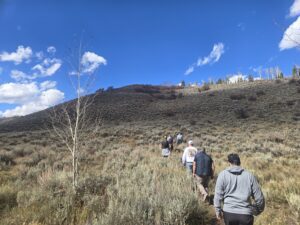
 I am just now descending back into “the real world” after what seems like decades away from the office. In reality, it was only two weeks – several days on a Men’s Peer Group Retreat working with plant-based medicine in the mountains of Colorado; followed by my wife and two other couples meeting me “out there” for some leisurely hiking and fellowship, and then my annual and now, last, men’s golf trip to Alabama.
Each one of these situations allowed for a very diverse experience and reflection. Or, as one of my favorite authors, Irv Yalom, calls it, “grist for the therapy mill.”
In all honest, I’m still processing – still integrating – all of it. I mean, I am literally writing this in the back of a pickup truck zipping up I-65 somewhere in the middle of Alabama, hoping to be home in the next 7-8 hours. So, yeah. I lot more integration to do over the next few weeks. And, I’m sure, as the lessons of these experiences reveal themselves, I will share.
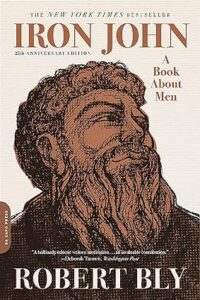
But what I want to share with you today is some of the preparation work I did for this time – especially for the Colorado plant-medicine experience. As a group, we all invested some time into reading the tale and assessment of Iron John – a seemingly ancient tale with a somewhat modern assessment. I’m still not sure, entirely, how I feel about it – again, more integration to come. But here is what I have cleaved from it thus far:
Overview
Iron John is a foundational text of the mythopoetic men’s movement, blending mythology, psychology, poetry, and cultural criticism to explore the modern man’s journey toward maturity. Drawing heavily on the Brothers Grimm fairy tale “Iron Hans,” Bly interprets it as a map for recovering deep masculine energy that modern society has suppressed.
The Myth of Iron John
The story centers on a wild man named Iron John (or Iron Hans) who is discovered in a forest and imprisoned by a king. A young prince later frees him and goes on a journey of self-discovery under Iron John’s mentorship. Bly treats this myth as an allegory for masculine initiation — a process men in modern society have largely lost.
Core Themes
1. The Wild Man Archetype
Bly argues that the “Wild Man” represents the instinctual, earthy, and emotionally deep part of masculinity. Unlike the violent or repressed masculine archetypes common today, the Wild Man is grounded, compassionate, and in touch with nature and feeling. Reconnecting with him is essential for men’s wholeness.
2. Initiation and Mentorship
Traditional societies guided boys through initiation rituals that marked the passage to manhood, often led by elder men. Bly claims that modern Western culture lacks these rites, leaving men emotionally adrift. Without male mentors, boys remain psychologically tied to their mothers and fail to develop a mature masculine identity. For me, this is a theme that continues to hit hard throughout much of my reading – we do not do well initiating young men into manhood, therefore we struggle with the idea of healthy masculinity from multiple angles.
3. The Wounded King and the Missing Father
Bly highlights the absence of strong fathers as a key cultural wound. The “soft male” of the late 20th century, he suggests, is empathetic but disconnected from strength and purpose. Men must heal this wound by seeking fatherly energy — not necessarily from their biological fathers but through symbolic fathers, mentors, or inner work.
4. Embracing Emotion and Depth
Bly critiques both traditional machismo and shallow modern sensitivity. True maturity involves integrating the “deep masculine” — courage, integrity, and responsibility — with emotional openness and empathy. This is a union of strength and feeling rather than the domination of one over the other.
5. The Hero’s Journey and Soul Work
Following the Jungian model, Bly describes a psychological descent where men must confront their wounds, shadows, and grief to access authentic power. This process is painful but transformative, leading to a deeper connection with self, others, and the sacred.
Style and Influence
Written in poetic and mythic language, Bly weaves in references to Jung, mythology, poetry (Rilke, Rumi, Yeats), and mythological imagery. The book inspired a generation of men to form discussion groups and retreats (such as “men’s circles”) seeking spiritual and emotional renewal.
Criticism
While influential, Iron John has also been criticized for:
-
Idealizing traditional masculinity
-
Neglecting women’s perspectives and feminism
-
Relying heavily on mythic and symbolic interpretations rather than sociological analysis
Still, it remains a landmark text in men’s psychology and self-development.
Key Takeaway
To become whole, a man must journey into the forest — the inner wilderness — to rediscover the Wild Man within, heal his wounds, and integrate strength with compassion.
Want to go deeper? Here are the themes AI and I came up with – something I will even take some time to ponder.
🜂 1. The Wild Man: The Deep Masculine
At the heart of Iron John lies the Wild Man, the archetype Bly draws from the Grimm Brothers’ tale. Covered in hair and living in the forest, Iron John symbolizes the untamed, instinctual, and soulful masculine energy that civilization has driven underground.
Key Insights:
-
The Wild Man is not savage or violent, but connected to nature, feeling, and instinct.
-
He represents the depth dimension of manhood — the earthy, emotional, and mythic source of vitality that modern men have lost.
-
Bly contrasts this with both the “macho” man (overly armored, disconnected from feeling) and the “soft male” (sensitive but passive and ungrounded).
Psychological Function:
The Wild Man serves as the initiator who calls men to descend into their inner world — to confront grief, anger, fear, and longing — and to recover a whole, mature masculinity rooted in authenticity rather than performance.
🜃 2. Initiation and the Loss of Rites of Passage
Bly laments that modern Western culture offers no clear initiations for young men. Traditional societies always marked the transition from boyhood to manhood through rituals led by elder men — experiences of ordeal, separation, and teaching.
Consequences of the Missing Rite:
-
Men remain psychologically “boys”, seeking maternal approval or external validation.
-
Without initiation, the boy’s “golden ball” (symbolizing vitality and soul) gets lost, and the Wild Man — the guide to recovering it — remains imprisoned.
Bly’s Remedy:
Reconnecting with myth, ritual, and male mentorship provides a symbolic initiation. This involves:
-
Descent into the underworld of the psyche
-
Facing wounds and grief
-
Emerging with self-knowledge and responsibility
It’s a spiritual and emotional initiation, not a social one — a process of soul work rather than achievement.
⚶ 3. Fathers, Mentors, and the Wounded Male Lineage
Another major theme is the absence or weakness of fathers in modern life. Bly describes the “father wound” — the pain of growing up without a strong, emotionally present male figure.
Two Cultural Archetypes:
-
The Remote or Wounded Father – physically or emotionally absent.
-
The Soft Father – well-meaning but unable to transmit strength or boundaries.
Without real mentorship, boys never experience the transfer of masculine energy — the sense of responsibility, integrity, and courage that elder men once modeled.
The Call to Mentorship:
Bly argues that men must seek or become mentors. Mature masculinity isn’t inherited; it’s conferred. The Wild Man, in mythic form, becomes the archetypal father who guides the boy through inner initiation when real fathers fail to do so.
🜄 4. Grief, Wounding, and the Descent into the Soul
Much of the book’s power lies in Bly’s focus on grief and emotional descent as essential to male maturity. He insists that men must feel their sorrow, not escape it through work, alcohol, or distraction.
Symbolic Stages:
-
Descent into the underworld → confronting personal and ancestral wounds.
-
Sitting in ashes → allowing mourning and humility.
-
Recovery of the golden ball → reintegration of soul and vitality.
This descent is not a weakness but a rite of strength. Only by integrating pain can men access compassion, creativity, and depth — qualities of the mature masculine rather than the reactive boy.
🜁 5. Integration of the Masculine and Feminine
While Iron John emphasizes male psychology, Bly also acknowledges the need to integrate inner masculine and feminine energies. He warns against one-sided development: men who reject the feminine lose empathy, while men who reject the masculine lose purpose.
Integration Means:
-
Feeling without sentimentality.
-
Strength without domination.
-
Action guided by emotion, not divorced from it.
Bly’s vision of mature manhood is both fierce and tender — a man who can weep as easily as he can protect, who values both eros and discipline, wildness and wisdom.
🜔 6. Myth, Poetry, and the Return of the Sacred
Bly uses myth and poetry (from Rilke, Rumi, Yeats, Kabir) as languages of the soul. He believes that modern men, cut off from these symbolic realms, have become spiritually impoverished. Myths like “Iron John” are maps for inner transformation, not mere stories.
Function of Myth:
-
Reveals timeless patterns of male development.
-
Offers imagery and ritual that reconnect men with the sacred.
-
Invites men to live with mystery, imagination, and depth, rather than reductionism and control.
🜏 7. Cultural Critique: The Crisis of Modern Manhood
Bly critiques modern industrial and post-industrial culture for producing emotionally flat, disconnected men.
Mechanization and materialism have estranged men from nature, family, and inner life, while consumer culture offers only hollow substitutes for initiation.
The Result:
-
A generation of “soft males” — kind but unsure, spiritual but ungrounded.
-
Loss of community, meaning, and direction.
-
Confusion about what authentic masculinity looks like.
Bly’s response is not a return to patriarchy, but a re-rooting of men in archetypal depth — reclaiming the sacred masculine that honors both strength and sensitivity.
🜍 8. The Recovered Man: Toward Wholeness
The ultimate goal of the journey is wholeness — a man who has integrated the Wild Man within him.
This man is:
-
Rooted in earth and body
-
Emotionally available and deep
-
Spiritually awake and humble
-
Capable of service, love, and mentorship
Such a man, Bly says, stands between worlds — warrior and lover, king and fool, wild and wise.
Check out Iron John for yourself – click here.
Weekly Mental Health and Meaning Updates
Sign up below to receive weekly guidance from Dr. Dan.


