
Contempt. It’s a hard word to accept – it has such a strong negative connotation. It’s even harder to accept or understand when it is found in your most important and most intimate relationship. Sadly, I see it all too often in my office. I’ve even seen it in my own marriage from time to time. But, in a way, I guess that it is proof that there are ways OUT of the contempt trap. I have seen couples come back from the brink of disaster, and we have used these tools in our marriage. Here is what to look for, and what you can do about it.
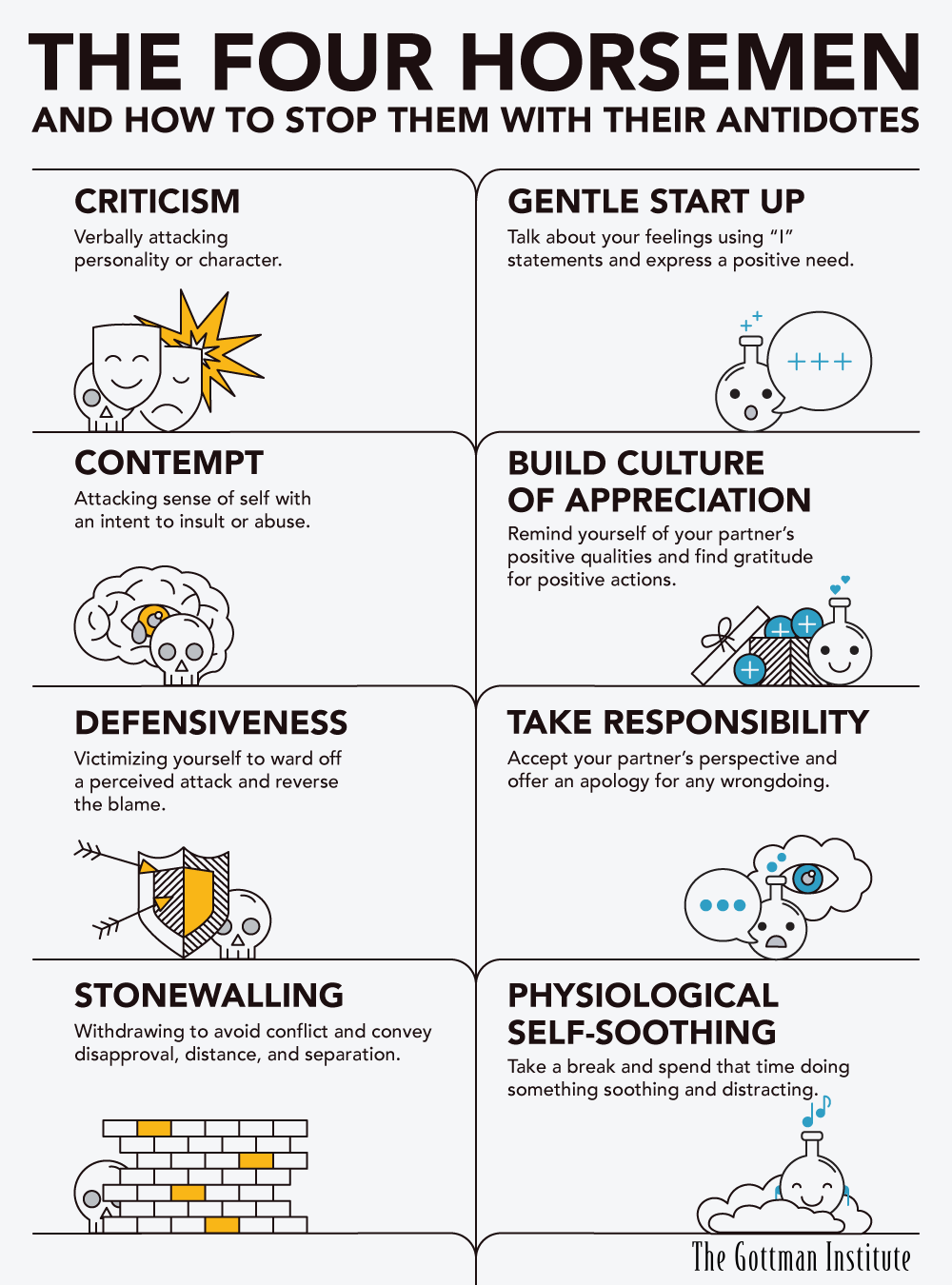
John Gottman is very clear—and very serious—about contempt. In his research on marriage stability, contempt is the single strongest predictor of divorce. But he is equally clear that contempt can be healed when couples understand where it comes from and practice specific antidotes.
Below is a clear, Gottman-faithful summary, with some clinical nuance that may be especially relevant given your work with meaning, values, and suffering.
1. What Gottman Means by “Contempt”
Gottman defines contempt as communicated disgust and moral superiority. It shows up as:
-
Sarcasm, mockery, eye-rolling
-
Name-calling, sneering humor
-
“I’m better than you” energy
-
Dismissiveness or intellectual superiority
Contempt says: You are beneath me.
Importantly, Gottman found that contempt is often the end result of long-unexpressed resentment, not simply cruelty.
2. Why Contempt Is So Toxic
Gottman’s longitudinal research shows that contempt:
-
Erodes emotional safety
-
Activates chronic defensiveness
-
Suppresses repair attempts
-
Correlates with health problems (immune suppression in the recipient)
Once contempt becomes habitual, couples stop seeing each other as allies and begin seeing each other as adversaries—or burdens.
3. The Core Insight: Contempt Grows Where Appreciation Dies
Gottman repeatedly emphasizes this principle:
Contempt cannot coexist with appreciation.
Contempt flourishes when:
-
Positive sentiment override is gone
-
The relationship narrative becomes “I give more than I get”
-
Partners stop noticing effort, intention, or goodwill
This is critical: you cannot argue contempt away. You must replace the emotional ecosystem that supports it.
4. Gottman’s Primary Antidotes to Contempt
A. Build a Culture of Appreciation and Respect
This is not “be nicer”—it is systematic retraining of attention.
Practices include:
-
Daily expressions of specific appreciation (“Thank you for…”)
-
Noticing effort, not just outcomes
-
Verbalizing respect even during conflict
Gottman encourages couples to over-practice appreciation, especially when it feels awkward or forced at first.
B. Replace Criticism with Gentle Start-Ups
Contempt often rides on chronic criticism.
Instead of:
“You never think about anyone but yourself.”
Use:
“I’m feeling overwhelmed and I need some support right now.”
Gentle start-ups reduce the emotional arousal that fuels contemptive responses.
C. Increase Fondness and Admiration
Fondness is not nostalgia—it is active remembering of why you chose this person.
Exercises include:
-
Recalling early positive memories
-
Sharing what you admired then—and what you still admire now
-
Re-humanizing the partner beyond current pain
This aligns strongly with meaning-centered work: the past is not erased by the present.
D. Address the Underlying Resentments
Gottman is explicit: you cannot heal contempt without addressing unresolved grievances.
This requires:
-
Structured conflict conversations
-
Emotional attunement
-
Taking responsibility for one’s part (even small parts)
Unspoken resentment is contempt’s oxygen.
5. A Crucial Gottman Distinction (Often Missed)
Gottman does not say:
“Contempt means the marriage is over.”
He says:
Contempt means the marriage is in danger unless the emotional climate changes.
Some marriages recover remarkably when:
-
Contempt is named honestly (without shaming)
-
Both partners commit to rebuilding respect
-
There is willingness—not perfection
6. A Meaning-Centered Frame (Consistent with Gottman)
While Gottman stays empirical, his work implicitly echoes a Frankl-like truth:
When suffering is no longer oriented toward meaning, it turns into contempt.
Healing contempt often requires:
-
Restoring a sense of shared purpose
-
Moving from “You are my problem” to “This is our suffering”
-
Reclaiming dignity—both one’s own and the partner’s
7. When Healing Contempt Is Unlikely
Gottman is also sober and honest. Healing is unlikely when:
-
One partner refuses accountability entirely
-
There is ongoing abuse or coercive control
-
Contempt is paired with stonewalling and zero repair attempts
-
One or both partners are emotionally disengaged beyond reach
In those cases, therapy may clarify not how to save the marriage—but how to end it with integrity.
Weekly Mental Health and Meaning Updates
Sign up below to receive weekly guidance from Dr. Dan.


